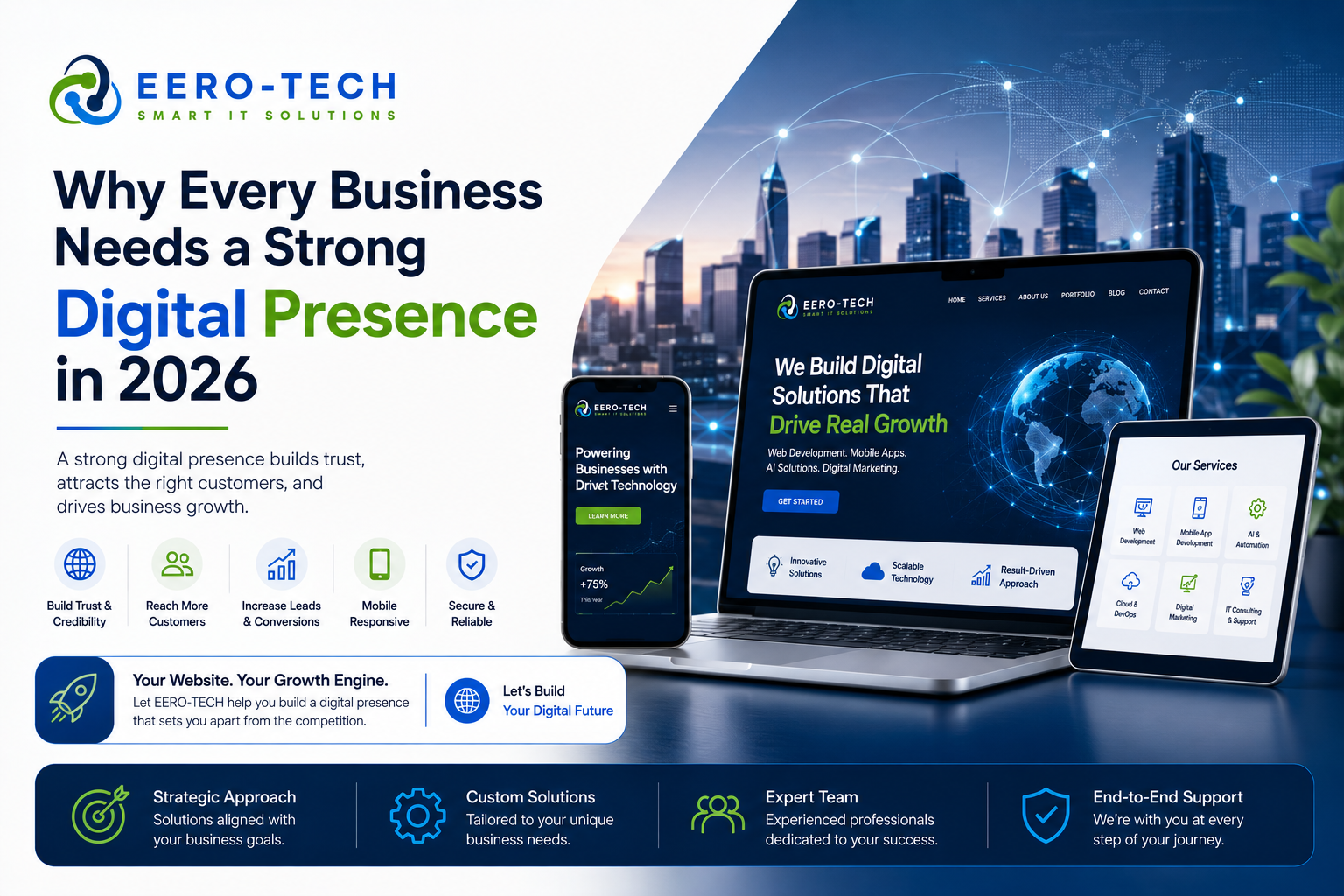
A company’s website is no longer simply an online brochure. For many businesses, it is the first place where potential customers learn about the brand, evaluate its credibility, explore its services, and decide whether to get in touch.
In today’s competitive digital environment, having a strong online presence can make a significant difference.
Your Website Is Your Digital Headquarters
Customers expect businesses to be available online.
Before contacting a company, people often search for its website, services, reviews, portfolio, and contact information.
A professional website can communicate:
- Who you are
- What you offer
- Who you serve
- Why customers should choose you
- How customers can contact you
A poorly designed or outdated website can create the opposite impression.
User Experience Matters
A modern website should be easy to navigate on desktops, tablets, and smartphones.
Visitors should be able to quickly find important information without unnecessary clicks.
Good user experience includes:
- Clear navigation
- Fast loading times
- Mobile responsiveness
- Readable typography
- Strong visual hierarchy
- Clear calls-to-action
- Accessible content
- Simple contact processes
The goal is to make the customer’s journey as easy as possible.
Website Performance and SEO
Design is only one part of a successful website.
Search engine optimization helps businesses become more discoverable when potential customers search for relevant products and services.
Important SEO considerations include:
- Search-friendly content
- Proper page structure
- Relevant keywords
- Optimized images
- Fast performance
- Mobile compatibility
- Internal linking
- Technical SEO
A well-developed website combines good design with strong technical foundations.
Turning Visitors Into Customers
A website should have a purpose beyond looking attractive.
Businesses can use strategic calls-to-action to encourage visitors to:
- Request a quote
- Book a consultation
- Contact the company
- Purchase a product
- Register for a service
- Download useful resources
The website should guide visitors naturally from discovering the business to taking meaningful action.
Integrating Your Website With Business Systems
Modern websites can also connect with other business technologies.
For example, a website can integrate with:
- CRM systems
- ERP platforms
- Payment gateways
- Email marketing platforms
- Analytics systems
- Customer support tools
- E-commerce platforms
- AI services
- Automation workflows
These integrations can transform a website from a simple information platform into an important part of the company’s digital infrastructure.
Digital Transformation Goes Beyond a Website
A strong digital presence is only the beginning.
Businesses can improve their operations through custom software, automation, cloud technologies, AI, mobile applications, and integrated business systems.
The objective is to create a connected digital ecosystem where technology supports both customers and internal teams.
Build Your Digital Future With EERO-TECH
EERO-TECH provides modern digital solutions designed around real business needs.
From professional websites and custom applications to AI, automation, e-commerce, and enterprise solutions, our goal is to help businesses build reliable and scalable digital systems.
Your digital presence should not simply represent your business—it should help your business grow.